Viloki Gohil’s Recipe for a Stronger FRIEND
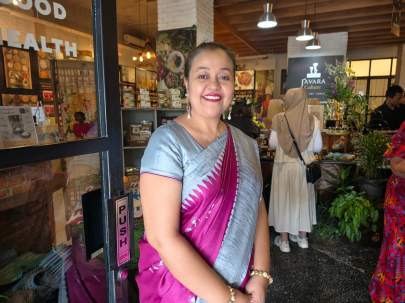
Jakarta moves at a pace far different from Labasa. Traffic surges beneath towers, everything happening at once. For Viloki Gohil, Acting Chief Executive Officer of the Foundation for Rural Integrated Enterprises and Development (FRIEND), that energy was part of the attraction.
“I actually liked it because of the hustle and bustle, the skyscrapers and the busy lifestyle,” she says. “Fiji is quite laid-back and relaxed, whereas there it was very fast.”
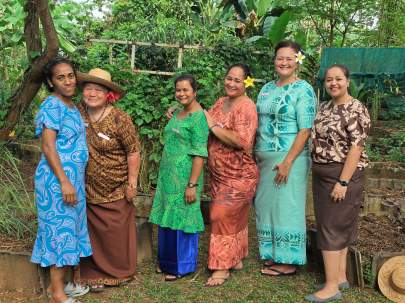
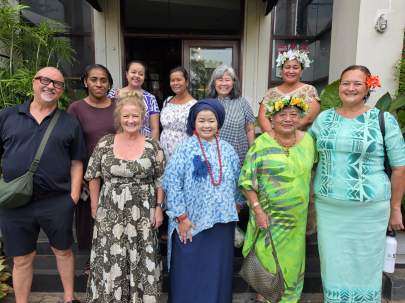
Gohil travelled to the Indonesian capital as one of six women entrepreneurs from Fiji and Samoa taking part in the Idea2Market Regenerative Bioeconomy Initiative. Supported by The Asia Foundation and delivered in partnership with Pacific Island Food Revolution, the initiative is helping Pacific women turn local food traditions, agricultural knowledge and biodiversity into premium products suited to retail markets.
For Gohil, the journey began long before Jakarta. Raised in Labasa from the age of four, she first joined FRIEND in 2011 as an administration officer. She gradually moved into programme work and later led the organisation’s Northern Division. She returned in 2023 when FRIEND reopened following the pandemic, eventually stepping into the Acting CEO role.
What drew her back was FRIEND’s work with people. “They were actually empowering people at an individual level rather than focusing on a single thing,” she says.
That community-first approach remains central to FRIEND, but Gohil went to Jakarta with a pressing question. Could FRIEND build a stronger social enterprise that would generate its own income and allow the organisation to invest more directly in the communities it serves?
“The more sustainable we become, the more of our own work we can fund,” she says. “We are passionate about addressing so many issues faced by the communities around us. A strong social enterprise would give us the ability to do more work on the ground and create a greater impact.”
Training with Helianti Hilman and her team at Indonesian food innovation hub Seniman Pangan offered answers. Gohil was struck by how closely their work resembled FRIEND’s own: using ingredients available in rural communities, developing products around them and connecting producers with markets. The challenges felt familiar.
The most important lesson was not simply how to make another product. It was how to make people desire it.
“We have to flip the story of our products,” Gohil says. Community stories matter deeply, she explains, but the products’ distinctive flavours and quality deserve to lead the story, supported by packaging and an identity that reflects their true value.
That shift has immediate possibilities for FRIEND. Its range already draws on the abundance of Fiji’s farms and kitchens: mangoes, limes, rosella, root crops, herbs, chutneys and pickles. Gohil sees room to reposition seasonal produce as premium products, strengthen packaging and connect each product with the people and places behind it.
The Jakarta training also opened the door to new ideas, including a bread premix, a packaged Indian curry sauce and sugar made from locally available root crops.
The week-long training culminated in a gastronomy event attended by Jakarta-based diplomats, media, food innovators and industry guests. Seeing Fijian food presented in that setting was an emotional moment.
“We were very proud to present Fijian food,” Gohil says. “It was a very proud moment for us as an entire team.”
Back in Fiji, she is considering how those lessons can strengthen both FRIEND’s product range and its restaurant in Lautoka, particularly during quieter tourism periods. She also wants more products prepared for export, building on markets already reached in Australia, New Zealand and the United States.
That is why she describes the Idea2Market as “one of a kind”. Its value extends beyond the six women who travelled to Jakarta. Participants are expected to train others in the community and by doing so extending the benefits. For Fijian women balancing businesses with the care of children, households and elderly relatives, Gohil says practical support can make all the difference.
“What the team and I must ensure is that customers choose FRIEND first, not only because of the community story, but also because they love the product,” she says.